

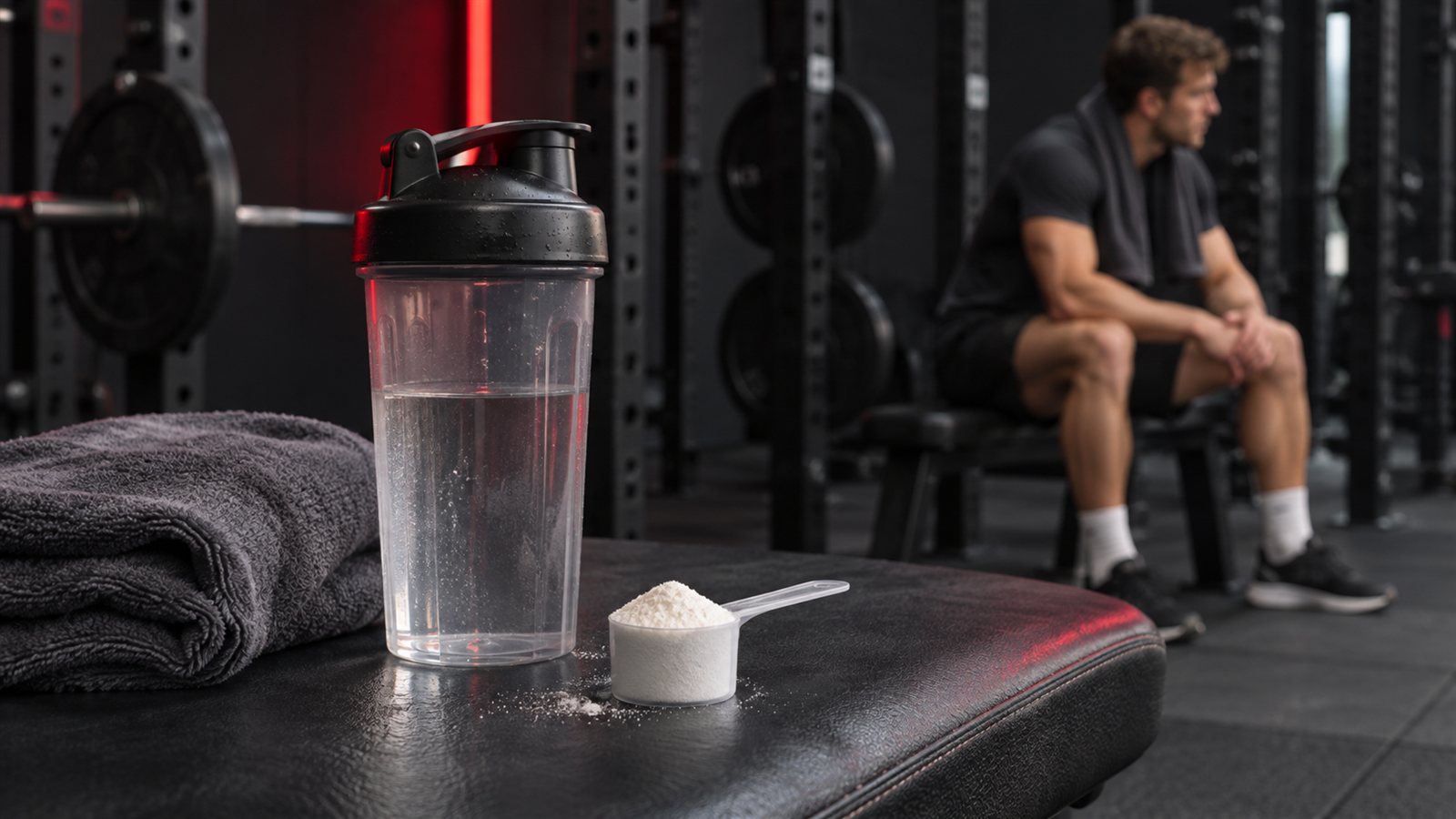
L-glutamine is an amino acid involved in normal metabolism, but taking extra glutamine does not automatically improve gym performance, muscle gain or recovery. Your body makes glutamine and you also obtain it from protein-containing foods. A supplement offers a measured, convenient source; whether it adds practical value depends on the reason you are considering it.
That distinction is important. A biological role is not the same as a proven supplement outcome. For most healthy people who train, total nutrition, adequate protein, sleep and a repeatable programme should remain the priorities.
The short answer
Research does not show a reliable improvement in strength, muscle growth, aerobic performance or body composition from L-glutamine alone in healthy athletes. A few small studies report narrower recovery findings, but results are inconsistent and do not establish a universal dose or best time to take it. If you choose to use it, follow the current product label and judge it against a specific goal rather than expecting a general performance boost.
What is L-glutamine?
Glutamine is an amino acid found throughout the body and in many protein-containing foods. It contributes nitrogen to a range of normal biochemical processes and is used by several tissues. In everyday conditions, the body can normally produce glutamine, which is why it is commonly described as a non-essential amino acid.
The “L” identifies the form used by the body and commonly supplied in food supplements. Powdered products are often unflavoured and designed to be mixed with water or another drink. The label should state the amount in each serving, the ingredients, directions and relevant warnings.
What does glutamine do for gym training?
The most accurate answer separates normal physiology from demonstrated results. Glutamine participates in metabolism, but evidence reviews have not found a consistent improvement in athletic performance, lean body mass or immune outcomes from supplementation in athletes. The US National Institutes of Health reaches a similar practical conclusion: research provides little support for taking glutamine alone to improve exercise or athletic performance.
Performance
Current evidence does not show a dependable increase in strength, power or endurance from glutamine alone.
Muscle gain
Glutamine should not replace sufficient energy, dietary protein or progressive resistance training.
Recovery
Some small trials report limited recovery findings, but the wider evidence is mixed and does not support a guaranteed effect.
Does glutamine help muscle recovery?
There is a reason the topic remains under discussion. One small randomised crossover study involving 16 adults found that L-glutamine taken after eccentric leg exercise reduced the loss of strength and some soreness measures over the following 72 hours. However, another controlled study found no positive effect on muscle-injury markers after resistance exercise.
A single positive trial does not settle the question. Participants, exercise protocols, doses and outcomes differ between studies. A 2019 systematic review and meta-analysis covering 47 studies found no association with most performance, body-composition and immune outcomes it assessed. A newer 2026 narrative review also describes the clinical findings as inconsistent and concludes that the evidence is insufficient to define a clear benefit or optimal timing strategy.
Glutamine vs protein vs creatine
| Product | What it provides | Where it fits | Important distinction |
|---|---|---|---|
| L-glutamine | A single amino acid. | A measured standalone option for someone who has a specific reason to include it. | It is not a complete protein and has not shown a dependable general performance benefit in healthy athletes. |
| Protein powder | A source of protein containing multiple amino acids. | A convenient way to help meet daily protein intake when food alone is impractical. | Its value depends on total daily intake and the wider diet, not simply the timing of one shake. |
| Creatine monohydrate | Creatine in a widely studied form. | Used consistently to increase physical performance in successive bursts of short-term, high-intensity exercise when the authorised conditions are met. | It has a different purpose and evidence base; glutamine is not a direct substitute. |
If the main problem is low daily protein, a complete protein source is the more direct comparison. If the goal relates to repeated high-intensity efforts, creatine has a distinct evidence base. Our guide to amino acids explains how individual amino acids differ from complete protein and why the name of an ingredient alone does not prove an outcome.
When should you take glutamine?
There is no well-established “best” time for healthy gym users. The evidence does not show that taking glutamine immediately before or after training reliably changes strength, muscle gain or recovery. Product directions and personal routine therefore matter more than chasing a narrow supplement window.
If you use a glutamine product, follow its current label rather than copying a research protocol or another person’s serving. Study doses are chosen for specific experiments and should not be treated as universal instructions. Consistency with the label is also more useful than repeatedly changing timing based on untested claims.
How to assess a glutamine powder
- Check the ingredient list. Confirm whether the product is single-ingredient L-glutamine or part of a blend.
- Read the amount per serving. Compare declared quantities rather than relying on the tub size or front-label language.
- Follow the directions. Use the scoop and mixing instructions supplied with that product.
- Check suitability and allergen information. Manufacturing environments and additional ingredients can differ.
- Avoid exaggerated expectations. Claims about guaranteed muscle growth, immunity or recovery are not supported by the overall exercise evidence.
GYM HIGH L-Glutamine Powder is a single-ingredient, unflavoured formula providing 5 g of micronised L-glutamine per labelled serving. The 500 g tub contains approximately 100 servings and is suitable for vegans and vegetarians. Those are formulation facts, not a promise that every gym user needs the product.
Frequently asked questions
Is glutamine good for the gym?
It is a convenient source of one amino acid, but current research does not show a reliable general improvement in gym performance, muscle gain or body composition for healthy athletes. Decide according to a specific purpose, the rest of your diet and the product label.
Does glutamine build muscle?
Not by itself. Resistance training, sufficient energy and adequate dietary protein are the main foundations for building muscle. Research has not shown that glutamine alone consistently increases lean mass in healthy athletes.
Should I take glutamine before or after a workout?
No timing window has been established as clearly superior for healthy gym users. Follow the directions on the product and choose a time that fits your routine rather than expecting timing alone to create a performance effect.
Can I take glutamine with protein or creatine?
They are different products with different purposes. A label may allow glutamine powder to be mixed with another drink, but combining supplements does not guarantee a better result. Check every label, total intake and personal suitability.
Is L-glutamine vegan?
That depends on the product and its manufacturing information. GYM HIGH L-Glutamine Powder is labelled as suitable for vegans and vegetarians, but always check the current label when comparing products.
How much glutamine should I take?
Use the serving and directions on the specific product label. Do not convert a dose from a small research study into general advice, and do not exceed the recommended amount.
Keep the formula clear
If a straightforward, unflavoured option suits your routine, GYM HIGH L-Glutamine Powder provides one declared ingredient and 5 g per labelled serving. Review the complete product information before deciding whether it fits your needs.
Train with purpose. Fuel with clarity.
Sources
- NIH Office of Dietary Supplements: exercise and athletic performance supplements
- Ahmadi et al. (2019): systematic review and meta-analysis of glutamine supplementation in athletes
- Legault et al. (2015): L-glutamine, strength recovery and soreness after eccentric exercise
- Djordjevic et al. (2026): review of glutamine, exercise and timing strategies
- GOV.UK: nutrition, health claims and supplement labelling