

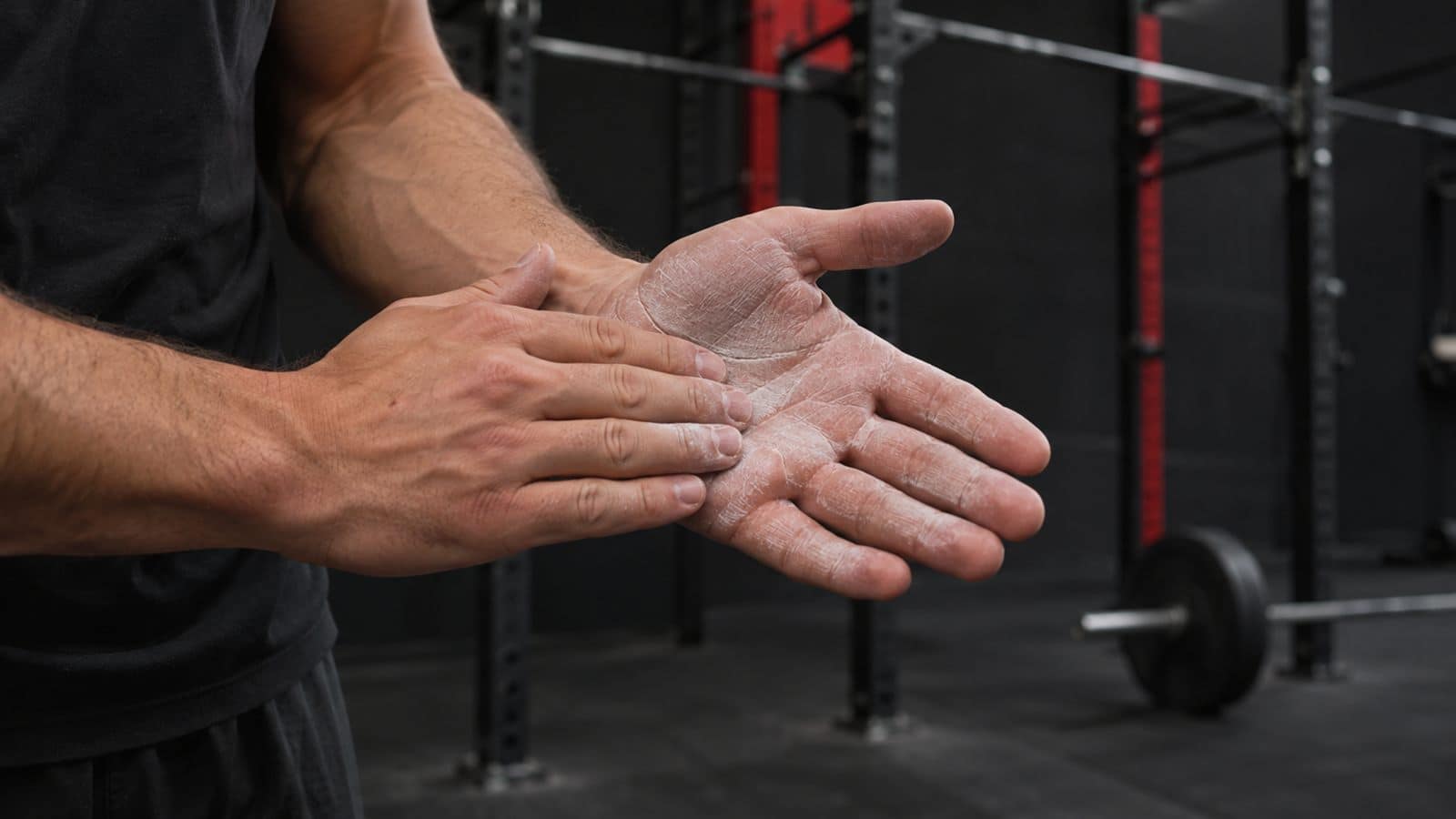
Liquid chalk for the gym is a practical way to keep your hands drier when sweat makes a bar or pull-up station harder to hold. Apply a small amount to clean, dry palms, spread it evenly and wait until it has dried before touching the equipment. It manages moisture at the hand–equipment contact point; it does not make your muscles stronger.
That distinction matters. Chalk may make a set feel more secure when moisture is the limiting problem, but it cannot correct poor technique, an unsuitable load or a bar that needs cleaning. It is a tool for grip conditions, not a shortcut around training.
The short answer
Use liquid chalk when your hands become slippery during pull-ups, deadlifts, rows, kettlebell work, rings or climbing. Start with less than you think you need, let the layer dry fully and check the venue’s rules. Wash it off after training and stop if your skin becomes irritated.
What is liquid chalk?
Gym chalk is usually based on magnesium carbonate. Traditional versions come as a block or loose powder. Liquid chalk suspends the chalk in a fast-drying carrier so it can be spread over the hands before the carrier evaporates and leaves a thin chalk layer behind. Formulas vary, so the current product label is the authority for ingredients, warnings and directions.
The practical purpose is moisture management. A dry contact surface can feel more predictable than a sweaty one, particularly when you need to keep the hand in one position on a bar. The research is more nuanced than many product claims suggest: results vary with moisture, surface and task.
In one small study of nine recreationally trained climbers, magnesium carbonate increased repetitions during assisted open-hand and pinch-grip pull-ups. That is useful evidence for a specific pull-up test, but it is not proof that chalk improves every lift or every surface. Other friction research has found that the effect depends on factors including moisture and surface roughness. Treat chalk as an option to test, not a guaranteed performance upgrade.
Liquid chalk vs block chalk vs loose chalk
| Format | How it is applied | Practical advantage | What to consider |
|---|---|---|---|
| Liquid chalk | Spread a small amount over the palms and let it dry. | Controlled application with less loose powder around the training area. | Needs drying time. Check the label, close the bottle and follow venue rules. |
| Block chalk | Rub the block over the contact areas of the hands. | Simple to control without pouring loose powder. | Can crumble and still create residue. Store it in a suitable container. |
| Loose chalk | Dip or rub the hands in powder and remove the excess. | Fast to reapply between attempts. | Easier to spill or disperse. Some gyms restrict it. |
No format is automatically best. The useful choice depends on your session, your skin, the equipment and what the gym permits. A venue that does not allow loose chalk may still have its own policy for liquid chalk, so ask rather than assume.
How to use liquid chalk in the gym
Start with clean hands
Dry your palms and remove oils, moisturiser or old chalk that could create an uneven layer.
Shake if directed
Follow the bottle instructions. Some formulas need mixing before application.
Use a small amount
Apply it to the palm and fingers that contact the bar. More product is not automatically better.
Spread it thinly
Rub the hands together until the contact areas have an even coat rather than wet patches.
Let it dry fully
Wait until the visible liquid has dried before gripping the equipment or starting the set.
Clean up afterwards
Remove residue from shared equipment, wash your hands and close the bottle securely.
When can gym chalk be useful?
Pull-ups and hanging work
Chalk may be useful when sweat makes the bar feel inconsistent during pull-ups, dead hangs or ring work. Apply it across the fingers and palm where they contact the bar, then let it dry. If your grip muscles are genuinely fatigued, another layer of chalk will not replace sensible programming or rest.
Deadlifts and rows
For barbell pulling, chalk and lifting straps do different jobs. Chalk manages moisture at the hand–bar contact point. Straps transfer part of the holding demand through material wrapped around the bar. Neither changes how you should brace or position the spine. Our weightlifting belt guide explains the separate role of bracing support during heavier lifts.
Kettlebells, dumbbells and gymnastics
A thin layer may help when a smooth handle becomes slippery, but too much residue can create its own poor contact surface. Dynamic skills also create friction against the skin, so more chalk is not always more comfortable. Use the minimum that solves the moisture problem.
Liquid chalk or lifting straps?
Choose according to the problem you are trying to solve. If sweat is causing the bar to move in otherwise fresh hands, chalk is the more direct option. If grip fatigue is intentionally being reduced for a particular pulling exercise, straps may be considered. Chalk does not remove grip demand, while straps are not a substitute for learning to hold a bar safely.
You can also train without either tool. The aim is not to collect equipment; it is to choose the smallest useful intervention for the session. That approach fits the same training principle discussed in our strength training lessons guide: technique and repeatable decisions matter more than adding complexity.
Six common liquid chalk mistakes
- Using too much. A thick layer wastes product and may leave more residue on the equipment.
- Gripping the bar while it is still wet. Give the carrier time to evaporate and the chalk layer time to form.
- Applying it over dirty or oily hands. Start with clean, dry skin for a more even coat.
- Assuming every gym allows it. Check the venue policy before opening the bottle.
- Ignoring the equipment. Chalk cannot fix a contaminated handle, damaged knurling or unsafe setup.
- Leaving residue behind. Clean shared equipment after the session and wash your hands.
Frequently asked questions
Is liquid chalk allowed in gyms?
It depends on the venue. Some gyms prefer it to loose chalk because application is more controlled, while others restrict all chalk. Ask staff and follow the cleaning policy before using it.
Is liquid chalk good for pull-ups?
It can be useful when sweaty hands make the pull-up bar feel slippery. A small study in trained climbers found more assisted pull-up repetitions with magnesium carbonate than without it, but the sample was small and the result should not be generalised to every person or exercise.
How much liquid chalk should I use?
Start with a small amount that creates a thin, even layer across the contact areas of your hands. Follow the bottle directions because consistency and application can vary between products.
How long should liquid chalk dry?
Wait until the visible liquid has evaporated and the hands feel dry before touching the equipment. Use the label’s stated timing if it provides one rather than relying on a universal number.
Does liquid chalk wash off?
Most residue can be removed with soap and water. Follow the product directions, clean any shared equipment and consider normal hand care if frequent chalk use leaves your skin feeling dry.
Is liquid chalk better than block chalk?
Not in every setting. Liquid chalk offers controlled application and less loose powder, while a block is quick to rub onto the hands and has no liquid drying stage. Venue rules and personal preference often decide the better format.
Keep chalk use simple
Use a thin layer, let it dry and clean the equipment after training. GYM HIGH Liquid Chalk 250 ml is designed for practical gym-bag use across pulling, climbing and grip-based sessions.
Train with purpose. Fuel with clarity.