

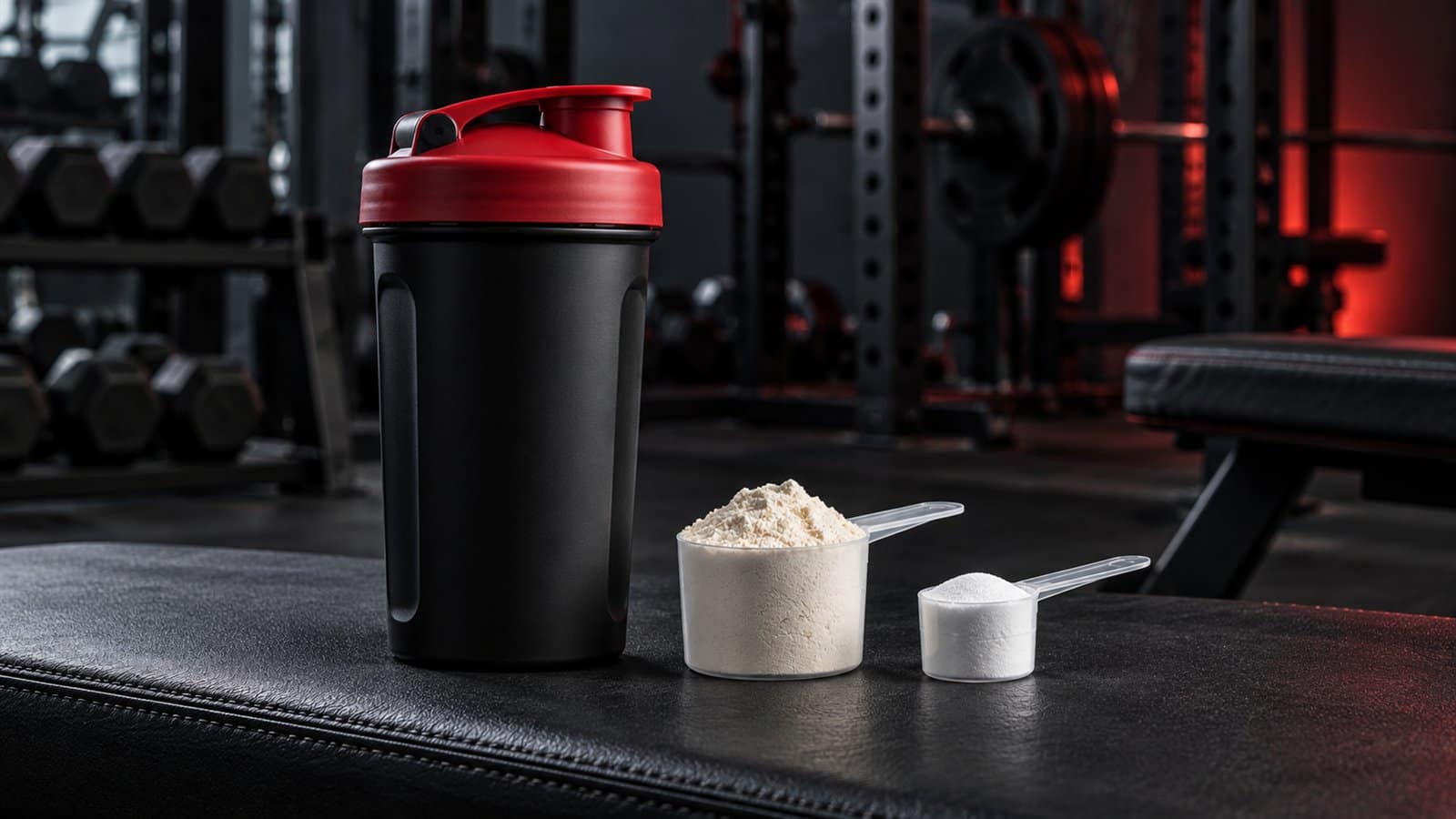
Yes, you can mix creatine with protein powder in the same shake. They do not need to be separated simply because they serve different purposes. For most people, putting both into one shaker is a practical way to follow two label directions without creating another step in the day.
The important details are less exciting than the internet makes them sound: check both labels, avoid counting the same ingredient twice and do not assume the combination creates a special shortcut. Protein powder is a convenient way to add dietary protein. Creatine is used for a different training-performance role. Mixing them is mainly about convenience.
The quick answer
- Same shaker: yes, when both product labels allow their normal servings to be mixed with a drink.
- Water or milk: either can work; choose according to the protein label, allergens, taste and the calories you want.
- Timing: there is no need to invent a narrow post-workout deadline.
- Most important check: make sure the protein, mass gainer or all-in-one formula does not already contain creatine.
- Storage: prepare the shake close to when you plan to drink it rather than leaving creatine mixed in liquid for a long period.
Why mix creatine and protein powder?
The simplest reason is routine. If you already make a protein shake regularly, adding a separately measured serving of creatine can be easier to remember than preparing another drink.
Protein powder
A food-format choice that helps add protein when meals do not conveniently cover the amount planned for the day. The source, protein per serving, allergens and total diet all matter.
Creatine
A separate supplement used in relation to repeated short, high-intensity exercise. The current Great Britain authorised claim has specific conditions, including a daily intake of 3 g and an adult high-intensity exercise audience.
One does not replace the other. Creatine is not a protein, and a scoop of protein powder should not be assumed to contain creatine unless the ingredient list says so. Equally, adding creatine does not turn a shake into a complete meal or compensate for inconsistent training and nutrition.
A small controlled study found that taking creatine with a protein-and-carbohydrate mixture increased whole-body creatine retention compared with a low-carbohydrate condition. That is useful evidence that the ingredients can be consumed together. It does not prove that every creatine-and-protein shake produces extra muscle or that taking them separately is ineffective.
How to mix creatine with protein powder
Add the liquid
Use the amount of water, milk or suitable plant drink recommended for the protein product.
Add protein
Measure the serving shown on the protein label rather than estimating from scoop size alone.
Add creatine
Use the creatine product’s supplied measure and current directions. Do not add an extra scoop by habit.
Shake and drink
Mix thoroughly and drink it reasonably soon after preparation. If powder settles, add a little liquid and shake again.
Creatine monohydrate may not dissolve completely in a cold drink. A little sediment does not mean the serving has failed, but you need to drink the complete mixture rather than leave the last portion in the shaker.
Research reviews note that dry creatine monohydrate is stable, while creatine gradually breaks down once stored in solution, particularly with higher temperatures and lower pH. This is a reason to mix the shake when you need it rather than prepare an acidic drink the night before.
Should you use water, milk or a plant drink?
Creatine does not require one particular liquid. The more useful decision comes from the rest of the shake.
- Water keeps the drink lighter and does not add calories or another allergen.
- Milk changes the calories, protein and allergen profile, and can make the shake thicker.
- Plant drinks vary widely in protein, calories, added ingredients and allergen status, so check the carton rather than treating them as interchangeable.
Flavour also matters. Unflavoured creatine is usually the easiest pairing because it does not compete with the protein flavour. If either product is flavoured, test a small serving before committing to a full shaker.
When should you take creatine and protein together?
You can use the combined shake at the time that fits both labels and your wider diet. It may be after training, between meals or at another repeatable point in the day. Avoid turning a convenient routine into a claim that one exact minute is essential.
Protein intake is considered across the whole day, while creatine research normally uses repeated intake rather than treating it like an instant stimulant. The practical priority is following the finished products consistently. If you use creatine capsules rather than powder, our separate creatine capsule routine guide covers daily use, timing and rest days without mixing the two formats.
How much creatine and protein should go in the shake?
Use the serving stated on each product, not a universal recipe copied from another brand. Scoops can hold different amounts, and some protein powders or mass gainers include extra active ingredients.
Research commonly discusses 3–5 g per day of creatine monohydrate, but that range does not override the directions on a finished product. GYM HIGH Creatine Monohydrate 400g currently provides 5 g per labelled serving. Check the pack you actually receive before use.
Protein needs depend on the person, diet and training plan. A protein shake should fill a defined gap rather than automatically being added on top of a diet that already provides enough. Compare current options in the Gym High protein powder range, including protein per serving, allergens and preparation directions.
Five mistakes to avoid
- Double-counting creatine. Read the protein, mass gainer and pre-workout labels before adding a separate serving.
- Using the scoop as the unit. A scoop is only useful when it belongs to that product and matches the current label.
- Assuming more is better. Do not exceed either recommended daily intake.
- Leaving the mixed shake for a long time. Dry powders store differently from creatine already mixed into liquid.
- Treating the combination as a complete programme. Supplements do not replace a varied diet, progressive training, sleep or recovery.
Who should get individual advice first?
UK government supplement guidance recommends reading and following product warnings and directions. It also advises speaking with a GP or appropriate healthcare professional before taking a supplement if you are pregnant, breastfeeding, have a medical condition or take regular prescribed medication.
Stop using a supplement and seek professional advice if you feel unwell. Do not try to solve a reaction by changing several servings or products at once.
Frequently asked questions
Can I put creatine in a protein shake?
Yes. Add the normal labelled serving of each product to the same shaker, provided neither label gives a conflicting direction. Check first that the protein formula does not already contain creatine.
Does protein powder stop creatine working?
There is no evidence in the sources reviewed for this guide that protein powder cancels creatine. Research has directly administered creatine with protein and carbohydrate. Combining them is mainly a convenient routine, not a requirement.
Is creatine better with protein?
Not automatically. One study found greater whole-body creatine retention when creatine was taken with protein and carbohydrate, but that does not establish a universal long-term advantage for a combined shake. Consistent use according to both labels remains the clearer rule.
Can I mix creatine with whey protein and milk?
Yes, if the labels allow normal mixing and milk suits your diet and allergens. Remember that milk changes the shake’s calories and nutrition compared with water.
Can I make a creatine protein shake the night before?
It is better to keep the powders dry and prepare the shake closer to when you will drink it. Creatine is less stable once stored in solution, especially in warmer or more acidic conditions.
Should I take the shake before or after training?
Either can fit a routine. Follow both labels and choose a time you can repeat. Do not rely on a narrow post-workout window or take an extra serving because the workout was hard.
Keep the routine clear
Start with two labels, two correctly measured servings and one reason for using each product. If a combined shaker makes that routine easier, it is a practical option — no complicated stack required.
Train with purpose. Fuel with clarity.